The best solar panel for camping has to fit the power station before it fits the campsite. My overall pick is the EcoFlow 160W Portable Solar Panel because 160W is enough to make useful progress on a 500Wh-class battery, and its common MC4 output is easier to adapt than a proprietary plug. The compromise is weight: the complete panel-and-case kit is 15.4 lb.
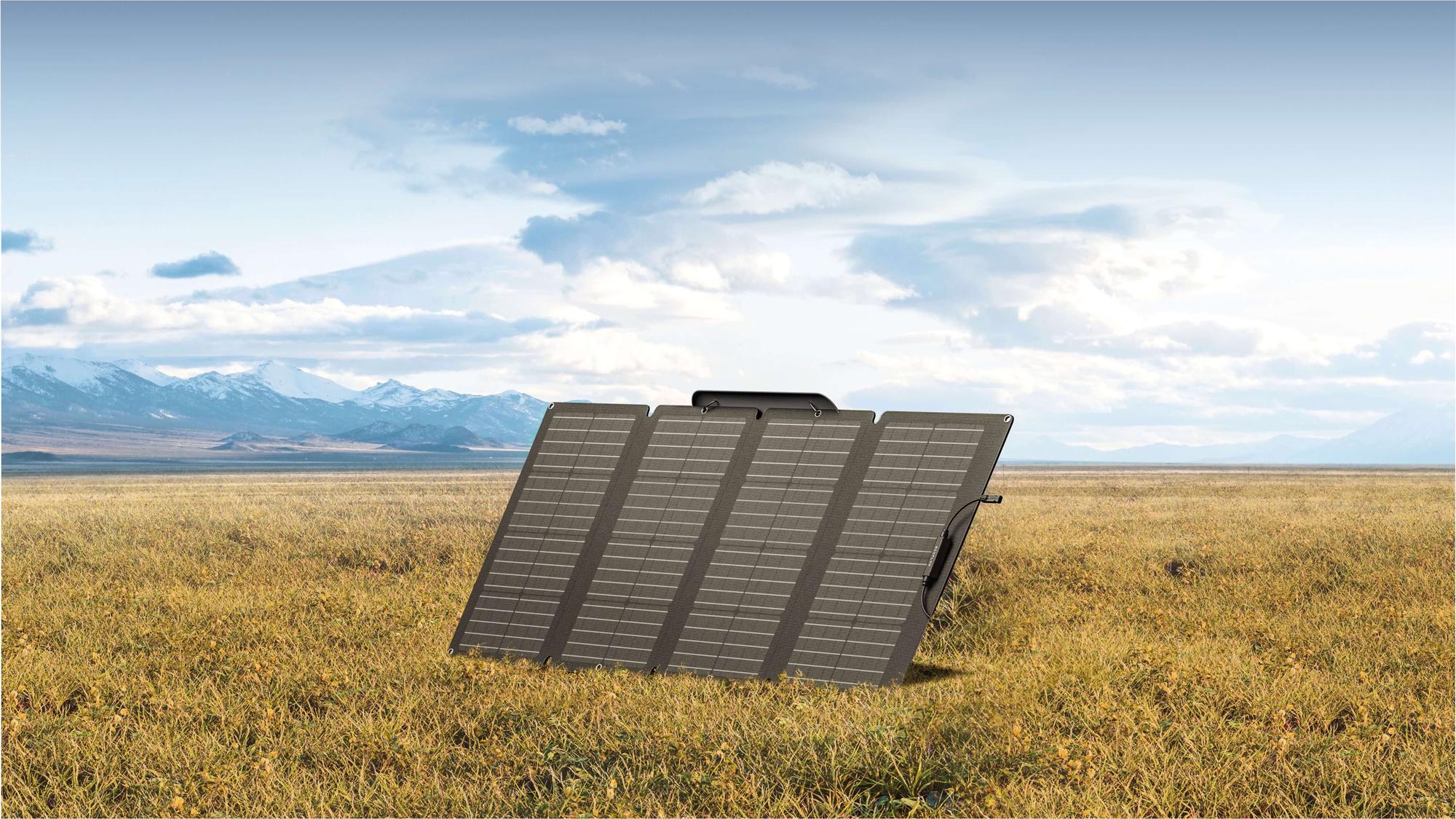
If every kilogram matters, the Jackery SolarSaga 100 Light cuts the panel weight to 2.05 kg. For backpacking with phones and smaller USB gear, the 0.9 kg SolarSaga 40 Air is more sensible than carrying a car-camping panel. Wattage is only one filter. Open-circuit voltage, connector, the power station’s input limit, packed size, and a stable way to face the sun decide whether a panel is useful.
This is a research-based guide. Watt Guy has not handled or measured these panels. Specifications come from manufacturer documentation, and prices plus availability were rechecked on October 18, 2026.
Last updated: October 18, 2026
Compatibility comes before panel wattage
A panel is usable only when its open-circuit voltage stays inside the station’s input range and its connector can be adapted with manufacturer-approved hardware. The matrix shows the check that can stop each purchase before weight or price matters.
Panel-to-station compatibility matrix. Confirm the exact station manual before connecting anything.
| Panel | Output path | Electrical check | Best station class | Blocking mismatch |
|---|---|---|---|---|
| EcoFlow 160W | MC4 with XT60 cable | 21.4V open circuit | 300Wh to 700Wh car-camping station | Station voltage limit below panel Voc |
| Anker SOLIX PS100 Bifacial | MC4 with XT60i cable | Verify station input range against current manual | Compact XT60-equipped station | Connector fits but voltage range does not |
| Jackery SolarSaga 100 Light | Anderson lead with DC8020 and DC7909 adapters | Verify the exact Jackery input port | Jackery station with a listed adapter | Wrong DC barrel size |
| EcoFlow 110W | MC4 with XT60 cable | 21.8V open circuit | Compact car-camping station | Station voltage limit below panel Voc |
| Jackery SolarSaga 40 Air | DC8020, DC7909, USB-A and USB-C | 25V open circuit, plus or minus 5 percent | Small station or direct USB gear | Expecting laptop-class output from 15W USB-C |
Car-camping panels from 100W to 160W
EcoFlow 160W for a 500Wh-class station
The EcoFlow 160W Portable Solar Panel strikes the most useful balance for car campers. Its 18.2V operating point and 21.4V open-circuit voltage fit many small and medium power stations once the connector and input range are confirmed. EcoFlow includes an MC4-to-XT60 cable, and the case doubles as a stand.
A 160W label does not mean 160W from dawn to dusk. Shade on one section, cloud, heat, poor angle, cable loss, and the station’s own input limit can all cut charging power. Still, 160W gives more room for imperfect conditions than a 100W panel without jumping to a bulky 300W or 400W array.
The drawback is the 15.4 lb kit and a four-panel shape that needs clear ground. Best Buy Canada listed its first-party SKU in stock online for CA$401.98 on October 18, 2026. Buy it for a vehicle-based camp with a 300Wh to 700Wh station; skip it for hiking or a station capped near 100W of solar input.
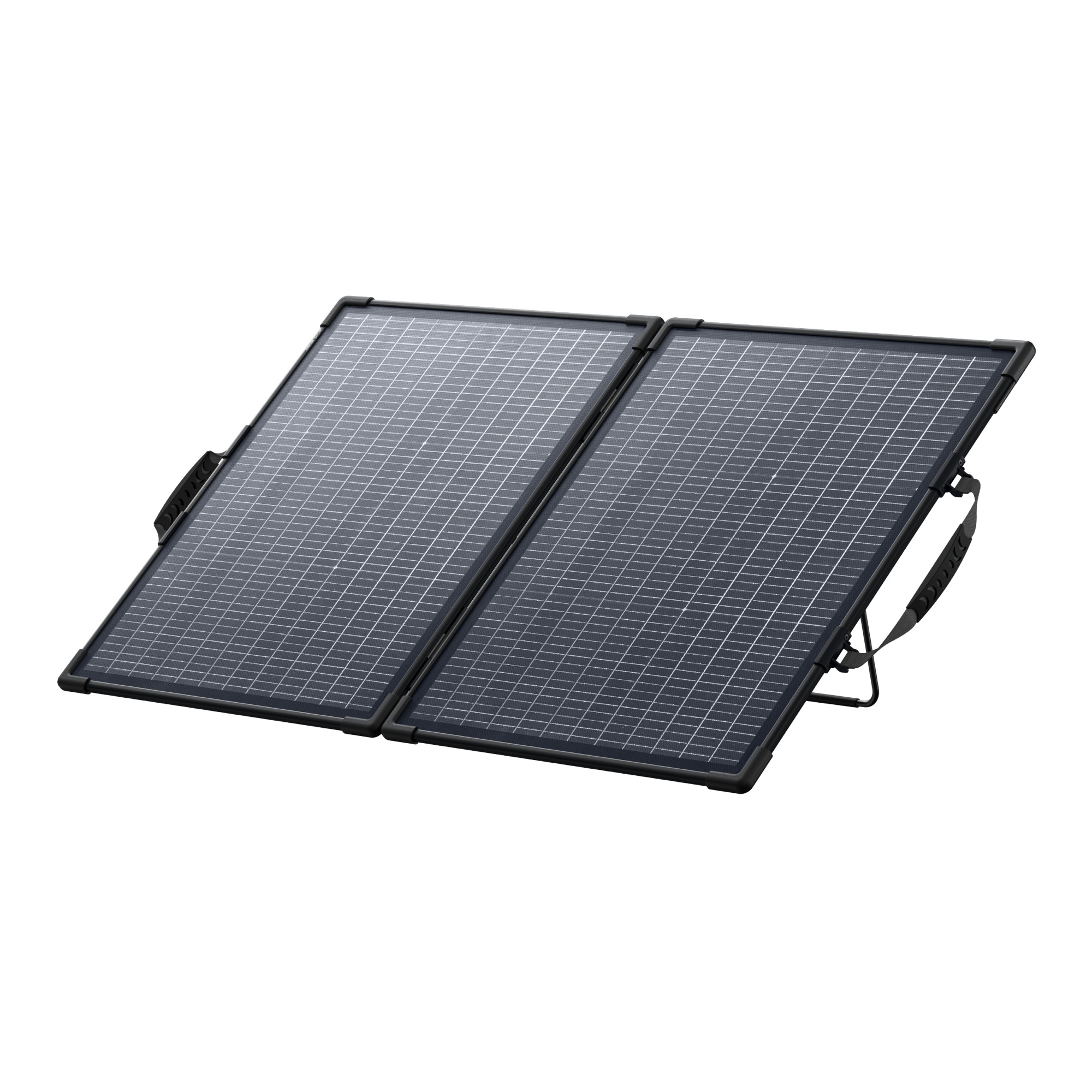
Anker SOLIX PS100 Bifacial for an XT60i kit
The Anker SOLIX PS100 Bifacial weighs 2.8 kg and produces 100W from a panel that folds to 51 by 60 cm. Its package includes MC4 leads and an XT60i cable, a useful combination for compatible Anker stations and other units that accept the same electrical range and connector.
The rear surface can collect reflected light, but bifacial output depends on what sits behind the panel. Grass and dark soil reflect less light than pale sand, concrete, or snow. I would treat rear-side production as a possible bonus, not energy to promise in a trip plan.
There is no direct USB output. A phone or laptop therefore needs a compatible power station or regulator between it and the panel. At US$249.99 from Anker in the United States, it is also expensive for 100W. Choose it for its 6.2 lb weight, folding stand, and cable set; skip it if direct USB charging or price matters more than portability.
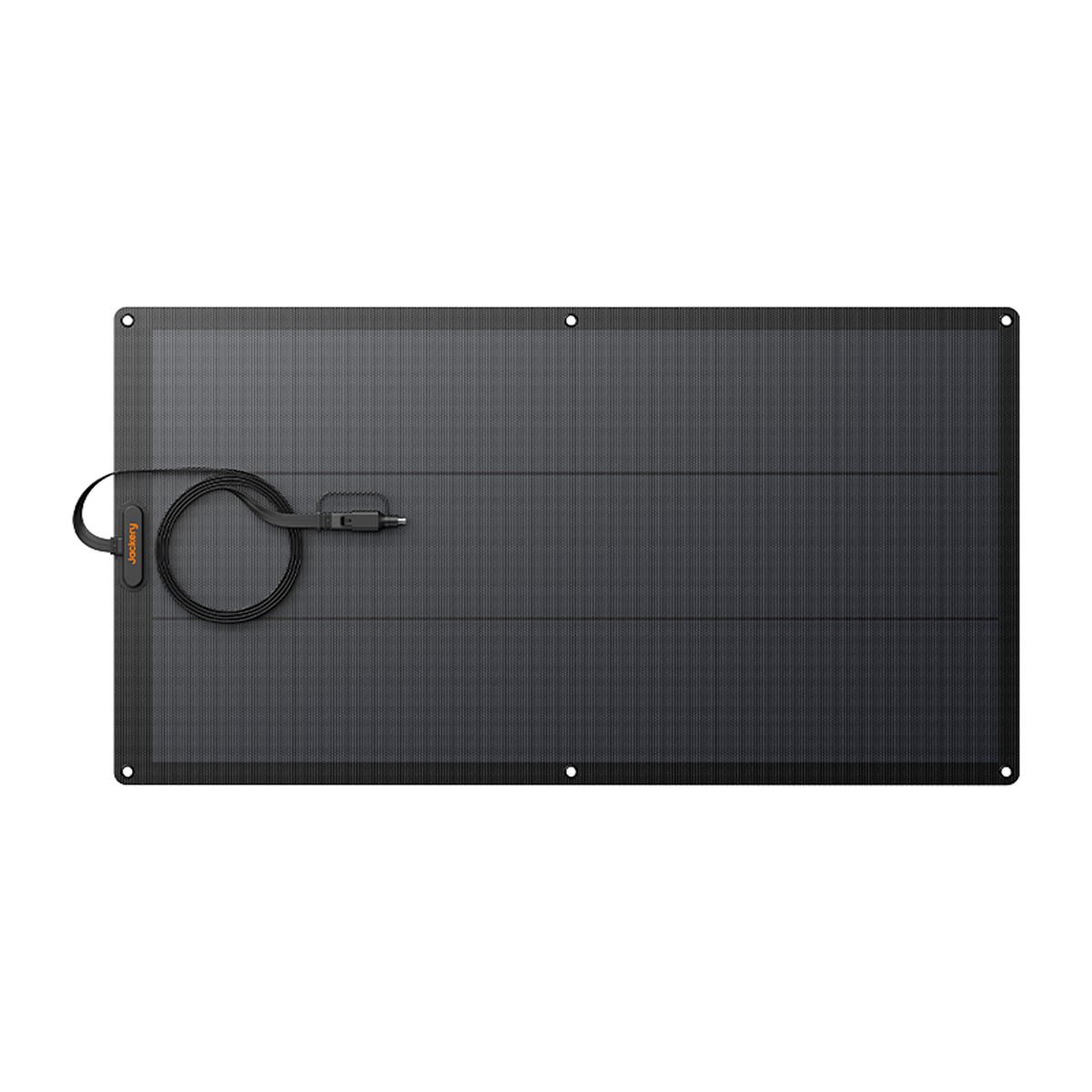
Jackery SolarSaga 100 Light when packed weight matters
The Jackery SolarSaga 100 Light weighs 2.05 kg, less than one-third of the EcoFlow 160W kit. Jackery supplies a built-in 3 m lead plus Anderson-to-DC8020 and Anderson-to-DC7909 adapters. That makes it an appealing match for a Jackery station when packed weight matters more than maximum daily energy.
Its flexible construction solves a carrying problem but creates a positioning problem. It has no conventional integrated ground kickstand, so the camper needs a stable, supported surface that does not bend the panel beyond its limits. A flat panel pointed poorly at the sun can surrender the advantage promised by its 25 percent stated cell efficiency.
Jackery Canada listed it at CA$259 with an active cart and a two-to-five-business-day shipping estimate. Buy it for a lighter 100W kit, especially with a Jackery station. Skip it if you want a self-supporting panel that can be moved around camp in one piece.
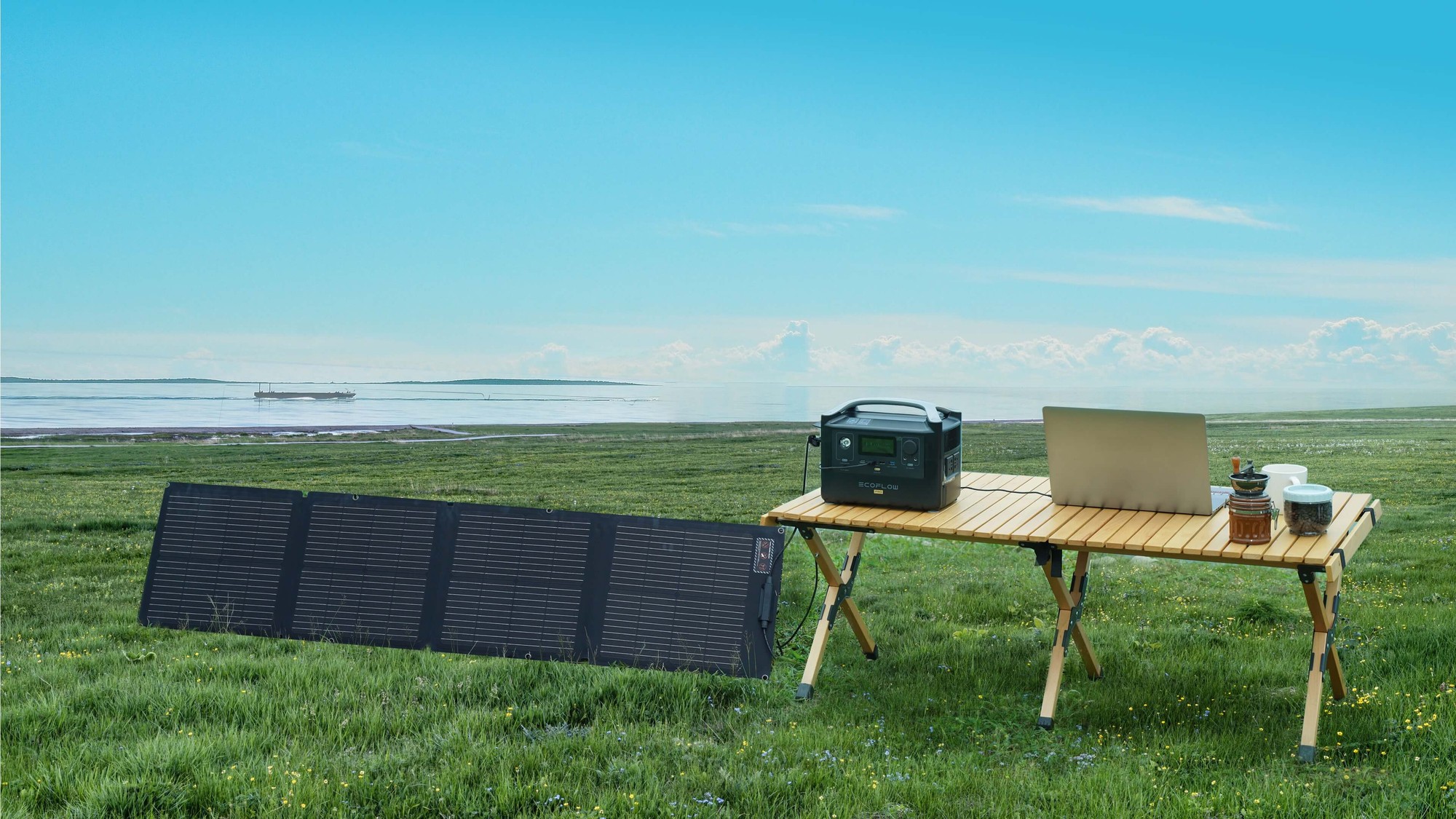
EcoFlow 110W when the 160W panel is too large
The EcoFlow 110W Portable Solar Panel folds to about 42 by 48 cm and uses the same practical MC4 output and included XT60 cable approach as the 160W model. Its 21.8V open-circuit voltage and 6.0A operating current are modest enough for many compact stations, subject to the station manual.
This panel makes sense when the 160W model is too wide when deployed or the station cannot accept the extra output. The panel itself is 8.8 lb, although EcoFlow lists the complete panel-and-case kit at 13.2 lb. That is still car-camping weight.
Best Buy Canada showed CA$301.98 on October 18, 2026, exactly CA$100 less than its 160W listing. Buy the 110W version for the lower price, smaller format, or a station whose input limit cannot use the larger panel. The 160W model still recovers energy faster when both fit.
Backpacking and direct USB charging
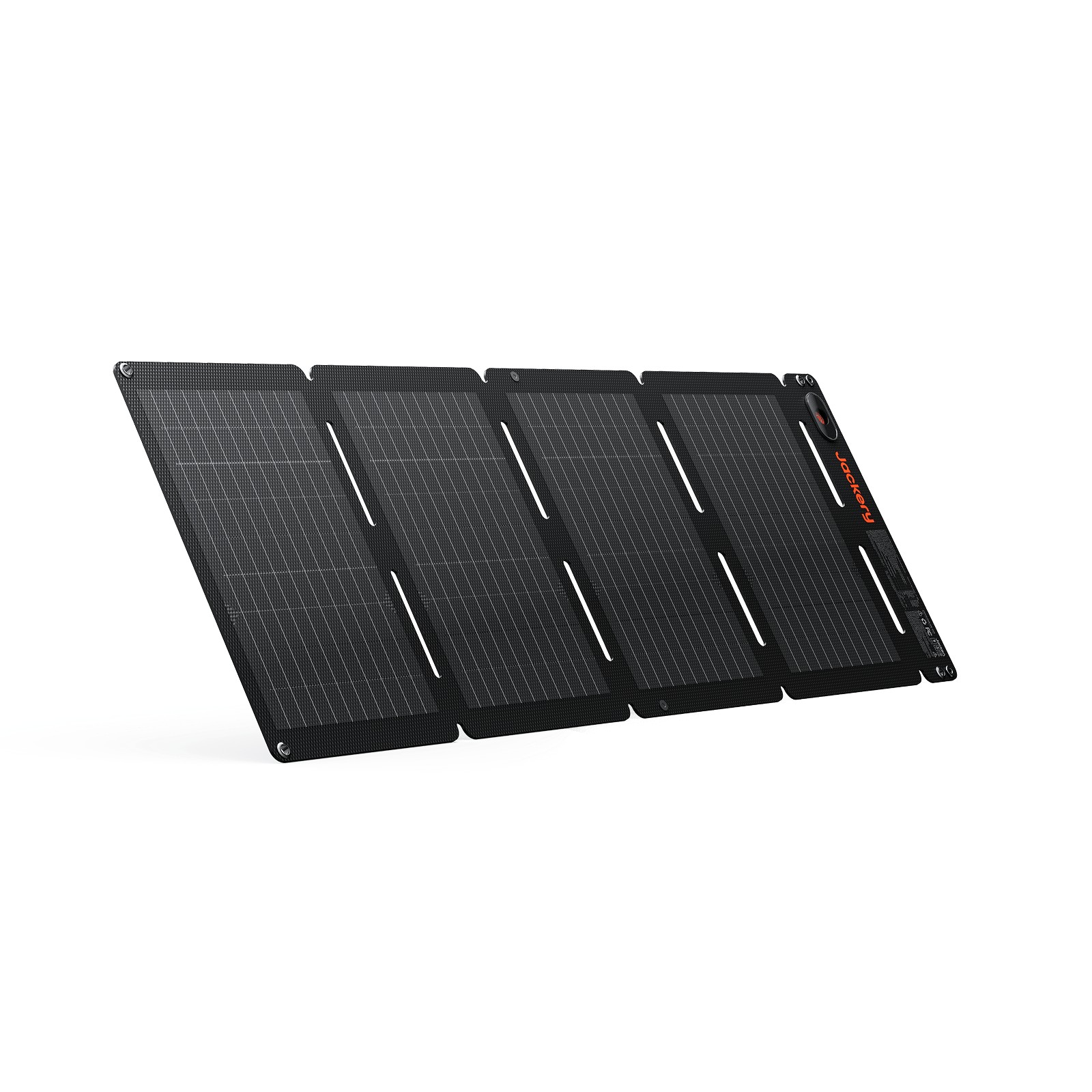
Jackery SolarSaga 40 Air for phones, cameras, and lights
The Jackery SolarSaga 40 Air is the only pick here I would consider carrying any real distance. It weighs 0.9 kg, folds into a book-sized package, and includes attachment points plus carabiners. USB-A and USB-C outputs let it charge small gear without a power station.
The USB-C port is limited to 5V at 3A, or 15W. That is enough for many phones but not a modern laptop’s normal charging rate. The separate DC output can feed a compatible Jackery station, and the included adapter covers both DC8020 and DC7909 inputs.
Forty watts is the hard compromise. It can maintain small electronics in good sun, but it is a slow way to refill a 500Wh battery. Jackery Canada listed it at CA$179 with an active purchase path. Buy it to keep phones, a camera, a GPS, and lights going; skip it for a cooler or large power station.
A 512Wh recharge example
Suppose a 512Wh station starts at 40 percent and needs to reach 90 percent. The required increase is 512Wh x 0.50 = 256Wh. The table assumes 70 percent of panel label output reaches the battery. Estimated peak-sun hours equal 256Wh divided by effective watts.
Estimated peak-sun hours to add 256Wh at 70 percent of rated panel output.
| Panel rating | Effective planning output | Estimated peak-sun hours | Not included |
|---|---|---|---|
| 40W | 28W | About 9.1 hours | Passing cloud, shade, station losses |
| 100W | 70W | About 3.7 hours | Passing cloud, shade, station losses |
| 110W | 77W | About 3.3 hours | Passing cloud, shade, station losses |
| 160W | 112W | About 2.3 hours | Passing cloud, shade, station losses |
These are estimates, not measured recharge times. A station can also clip panel output, and label wattage is not continuous from dawn to dusk.
Shade, short trips, and reasons to leave the panel home
Skip a portable panel if the campsite is heavily shaded or the trip is short enough to start with a charged battery. Solar cannot recover energy that never reaches the cells, and chasing patches of sun may become the day’s least entertaining activity.
Backpackers who need only a phone and headlamp may be better served by a charged power bank. A 100W folding panel plus a power station is much heavier than stored energy for a weekend. At the other extreme, RV owners who want permanent roof solar should use equipment designed for fixed mounting and have the system specified for its controller, fusing, cable run, and battery.
Do not use a portable camping panel as a shortcut to grid-tied home solar. Utility interconnection and household wiring require approved equipment, permits where applicable, and a licensed installer. Backfeeding a building through an outlet is illegal and can kill utility workers; it is never an acceptable use of a portable power station.
Choose only after the voltage and connector checks
The EcoFlow 160W panel is the broadest car-camping choice when its 21.4V open-circuit rating and XT60 path fit the station. The Jackery 100 Light trades output stability and easy positioning for much lower weight, while the SolarSaga 40 Air is the only option here that makes sense away from a vehicle.
A lower-wattage panel can be the correct buy when it fits the input limit and storage space. A higher label number is useless when the station rejects the voltage, clips the input, or cannot connect through an approved cable.
Compatibility, safety, and source method
Put the panel in sun, but keep the power station shaded, dry, and ventilated. Inspect cables and connectors for damage before use, keep connector contacts dry, and disconnect by gripping the connector body rather than pulling the cable. Do not combine panels unless the manufacturer documents the series or parallel arrangement for the exact station.
Ingress ratings have limits. An IP-rated panel can still have connector or adapter ends that must stay dry, and no product here should be packed wet or used contrary to its manual. Stop using equipment that is cracked, swollen, unusually hot, or damaged.
Most camping power stations contain lithium-ion batteries. Health Canada advises using the supplied or authorized charger, charging where the device can be seen, and keeping it away from soft surfaces and exit doors. No lithium chemistry is fireproof or free of risk.
I compared rated output, voltage, current, weight, packed size, connector set, ingress rating, price, and current orderability. A panel had to solve a distinct camping need and be available from its manufacturer or an established retailer in Canada or the United States on October 18, 2026. Sold-out, preorder, and backordered models were removed.
This ranking is based on published specifications and practical fit, not a simulated score. Watt Guy did not test output, low-light behaviour, water resistance, or durability. Rated power is a laboratory condition, so the worked sizing example labels its planning assumption instead of presenting it as a measurement.