Camping power stations get heavy fast, so the useful question is how much battery the trip actually needs. For most tent and car campers, I would start with the BLUETTI Elite 30 V2: 288Wh, 600W continuous output, and 4.3 kg at CA$299.99. Its capacity suits device charging and a short cooler run, not an unplugged long weekend.
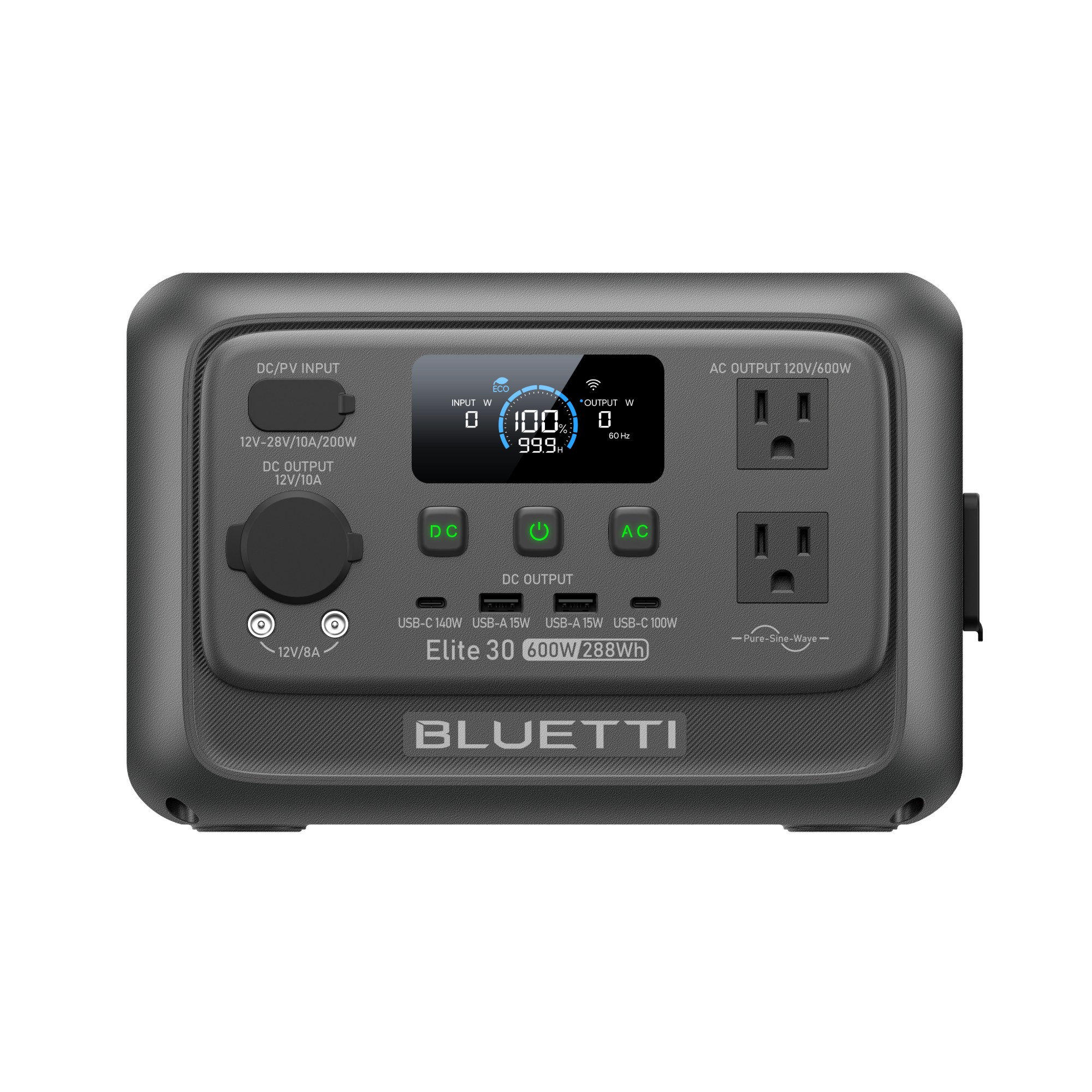
A smaller station makes more sense if the load is just phones, cameras, lights, and a laptop. Move up to roughly 750Wh or 1,000Wh when a compressor cooler or cooking appliance joins the list. I would choose by measured load and trip length, not by the biggest surge number on the box.
This is a research-based guide. I have not handled or bench-tested these power stations. Specifications come from manufacturer documentation, while availability and CA$ prices were rechecked on October 18, 2026.
Last updated: October 18, 2026
Plan the trip before choosing capacity
The examples below use an 80 percent delivered-energy allowance: rated Wh x 0.80. Daily load is the sum of each device’s watts multiplied by hours used. The numbers are transparent planning cases, not measured campsite consumption.
Illustrative camp loads and the smallest sensible class among these picks.
| Trip profile | Illustrative daily energy | Capacity class | Model fit | Reason to move up |
|---|---|---|---|---|
| Overnight electronics | 65Wh per day | 128Wh | BLUETTI Elite 10 | Add a laptop work session |
| Laptop and device kit | 235Wh per day | 288Wh | Elite 30 V2 or Anker C300 | Need AC cooking or a cooler |
| Compressor cooler weekend | 530Wh per day | 768Wh | BLUETTI AC70 | More than one day without recharge |
| Longer trip with heavier AC loads | 700Wh per day | 1,070Wh | Jackery Explorer 1000 v2 | High surge or poor solar weather |
For the 235Wh example, a 288Wh station gives about 230Wh after the allowance: 288Wh x 0.80 = 230Wh. That is close enough to require either a midday recharge or a larger station. Capacity should not be planned to the last watt-hour.
Compact trips at 288Wh or less
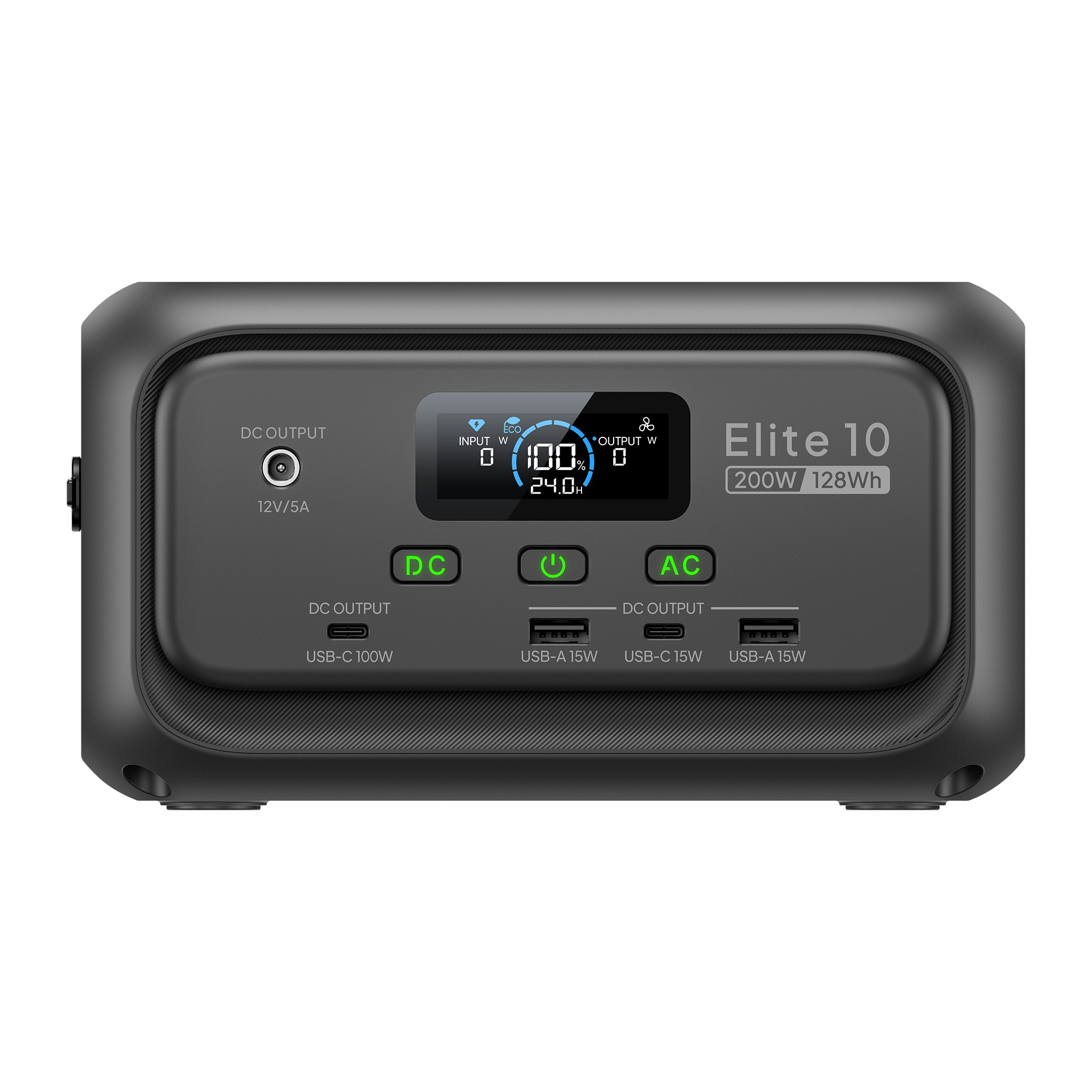
BLUETTI Elite 10 for an electronics-only overnight
The BLUETTI Elite 10 weighs 1.8 kg, yet it includes a 200W AC outlet, a 100W USB-C port, four other outputs, and a built-in light. This is the clean answer for charging a laptop, two phones, camera batteries, and camp lighting without carrying a 10 kg battery.
Its 128Wh battery and CA$179 price place it between a large USB power bank and a conventional power station. That AC outlet can handle a low-power charger, but it does not make the Elite 10 suitable for kettles, hot plates, or compressor startup loads.
Capacity is the hard limit. Even before conversion losses, 128Wh is less than three hours at a steady 45W. Choose it for day trips or an electronics-only overnight kit, and consider the Watt Guy laptop power bank guide instead if you do not need an AC outlet.
BLUETTI Elite 30 V2 for more AC headroom
The BLUETTI Elite 30 V2 can run loads that overwhelm most compact stations. Its 600W continuous inverter covers laptops, camera batteries, lights, fans, and many small kitchen devices. A 140W USB-C port can charge a large laptop without turning on the AC inverter, which should waste less energy.
It weighs only 4.3 kg and provides nine outputs. The 288Wh battery is rated for more than 3,000 cycles to 80 percent capacity, according to BLUETTI. At CA$299.99, it was essentially price-matched with the lower-output Anker C300 on the check date.
The drawback is that 288Wh still disappears quickly under an AC appliance. BLUETTI’s 1,500W lifting mode reduces voltage for compatible resistive loads, so it is not a substitute for a 1,500W inverter and should not be used to judge motor or electronic compatibility. Buy it for a compact setup with occasional AC use, but skip it for an all-night cooler plus multiple days away from an outlet.
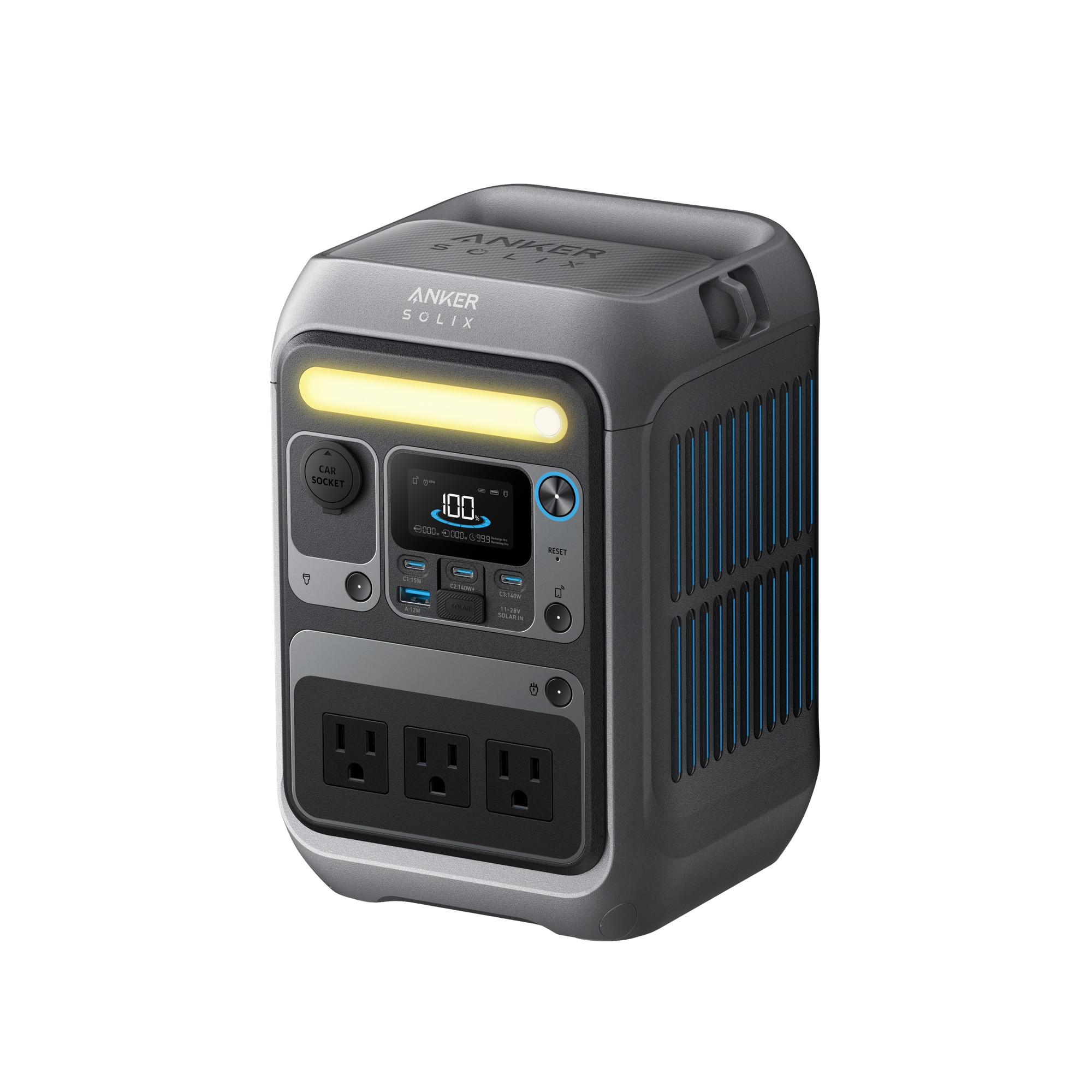
Anker SOLIX C300 for a USB-C-heavy camp kit
The Anker SOLIX C300 combines three AC receptacles, three USB-C ports, USB-A, and a 12V car socket in a 4.13 kg body. Two USB-C ports can each supply up to 140W, although total output and port-sharing rules still apply. The 300W AC rating is enough for electronics and some small camp gear.
Anker listed the C300 at CA$299.99 on October 18, 2026, putting it level with the Elite 30 V2 despite offering half the continuous AC output. Its shoulder strap and solar cable are also separate purchases. Pick it when its port layout and dual 140W USB-C outputs matter more than AC wattage.
Coolers and longer stays
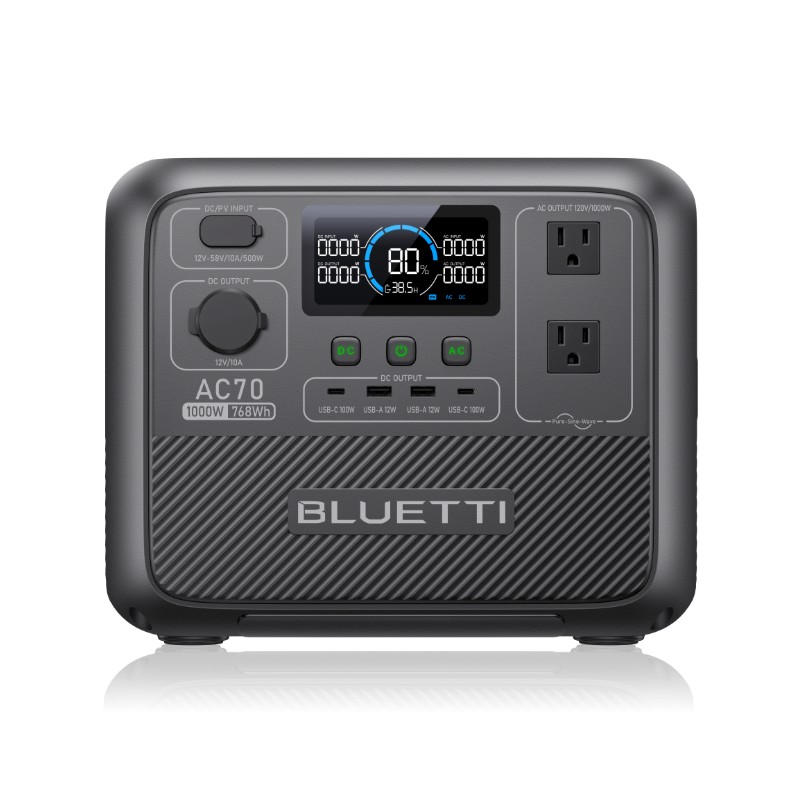
BLUETTI AC70 for a compressor cooler weekend
The BLUETTI AC70 raises capacity to 768Wh and continuous output to 1,000W. BLUETTI listed the station at CA$449 on October 18, 2026. Its regulated 12V car outlet is a better match for many compressor coolers than running the AC adapter, and 500W maximum solar input leaves room for meaningful daytime recovery.
At 10.2 kg, the AC70 is car-camping gear, not something to carry far from the vehicle. It also has only two AC receptacles. Buy it for a weekend base camp with a cooler, lights, and device charging; skip it when a 288Wh model already covers the load.
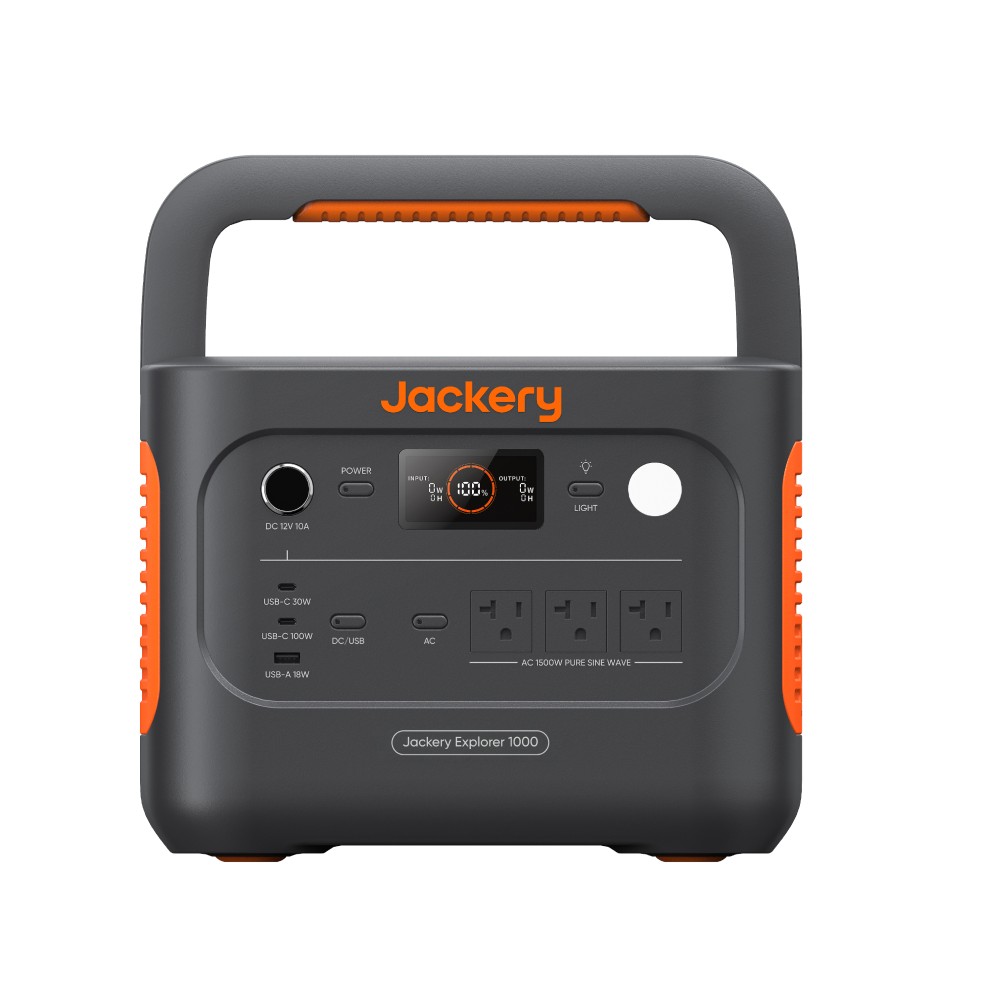
Jackery Explorer 1000 v2 for more than one day
The Jackery Explorer 1000 v2 stores 1,070Wh and supplies 1,500W continuously. That gives it enough inverter headroom for many kettles, coffee makers, and induction cookers, provided the appliance’s label stays within 1,500W. Three AC outlets, two USB-C ports, USB-A, and a car socket cover a mixed campsite.
Jackery rates its LiFePO4 battery for 4,000 cycles to at least 70 percent capacity. The station weighs 10.8 kg, only 0.6 kg more than the AC70 while holding 302Wh more. It was in stock at CA$649.
At CA$649 on October 18, 2026, it was CA$200 above the AC70, and the 400W solar-input ceiling is lower than the AC70’s 500W limit. A car-charging cable is not included. This is the pick for longer stays or occasional high-wattage appliances, not for someone charging only phones and a laptop.
What the specifications do not promise
A station’s Wh rating does not guarantee runtime at the AC outlets. Inverter loss, standby draw, temperature, and the station’s reserve reduce delivered energy. The 80 percent allowance used here is a planning assumption, not a claim about any model’s measured efficiency.
Start with watts. Add the simultaneous loads, then check the startup requirement of anything with a compressor or motor. A 45W cooler, 10W of lights, and a 65W laptop can draw 120W together, so every model here can cover the running load, but the cooler’s startup demand still needs to fit.
Next calculate energy. Multiply each device’s watts by its hours of use, then add the results in Wh. For a worked example, assume a cooler averages 25W over 12 hours after compressor cycling, lights use 10W for five hours, and device charging needs 100Wh. That is 300Wh + 50Wh + 100Wh, or 450Wh.
Nameplate capacity is not fully usable at the outlet. Using 80 percent as a cautious planning allowance, a 768Wh AC70 supplies roughly 614Wh: 768Wh x 0.80. That covers the 450Wh estimate with about 164Wh in reserve, but it is not a tested runtime. Cold weather, inverter overhead, battery age, and a harder-working cooler can shrink the margin.
Solar does not erase a poor energy budget. A panel reaches its rated output only in favourable sun and orientation, while trees, clouds, heat, and charging limits reduce it. Treat solar as a way to extend a trip, not as guaranteed daily energy.
Cases where a station is the wrong backup
Skip a power station if all your gear charges by USB. A high-output power bank is lighter and usually cheaper. Backpackers should be especially skeptical of carrying even the 1.8 kg Elite 10 unless the AC outlet solves a specific problem.
Do not rely on a consumer camping station as the sole power source for life-critical medical equipment. Follow the device maker’s backup requirements and discuss the plan with the care provider. A station can shut down from depletion, overload, temperature, or a fault.
Home backup buyers should also choose a product designed for that job. Never backfeed a house through an outlet. Connections to household wiring require suitable listed equipment, permits where required, and a licensed electrician.
Pick the lightest station that clears the load
The Elite 10 wins only when the load is genuinely small. The Elite 30 V2 is the strongest compact AC choice, while the C300 makes more sense for a kit dominated by USB-C devices. A cooler or multi-day trip pushes the decision toward the AC70 or Explorer 1000 v2.
Do the energy budget first, then check continuous and startup watts. Buying the biggest battery without that sequence adds cost and weight without proving it can run the intended appliance.
Campsite safety and research limits
Every pick uses LiFePO4 cells, but that does not make any lithium battery fireproof or risk-free. Health Canada advises charging lithium-ion devices where you can see them, away from soft surfaces and exit doors. Stop using a station that is swollen, dented, damaged, recalled, or unusually hot.
Keep the station dry, leave its vents clear, and follow the manufacturer’s charging-temperature range. Do not put it inside a sealed bin while operating. Check solar-panel voltage and connector compatibility before connecting a third-party panel.
These are battery power stations, not fuel generators, so they do not produce exhaust during normal use. Fuel-burning generators produce deadly carbon monoxide. Health Canada says never to use one indoors or in a partly enclosed space, and to keep it at least 6 metres from doors, windows, and vents.
I compared current capacity, continuous output, weight, port mix, solar input, cycle rating, and Canadian price. Each product had to be available to order directly from its manufacturer in Canada on October 18, 2026. Preorders, discontinued models, sold-out listings, and unclear stock were removed.
The five picks are organized by the problem they solve, rather than a simulated score. Manufacturer surge and lifting claims are not treated as continuous output, and runtime estimates are labelled as estimates. No hands-on Watt Guy testing was performed. For more on the chemistry shared by all five, see LiFePO4 vs lithium ion.
Product facts and ratings in this update come from the manufacturers’ current product pages and manuals.